Model comparison · 2026-09-08
AI Sovereignty and Open-Weight Models: What It Means for Europe
See how hosting location, open model weights and vendor lock-in answer different questions in the AI sovereignty debate, with concrete examples from a working catalog.
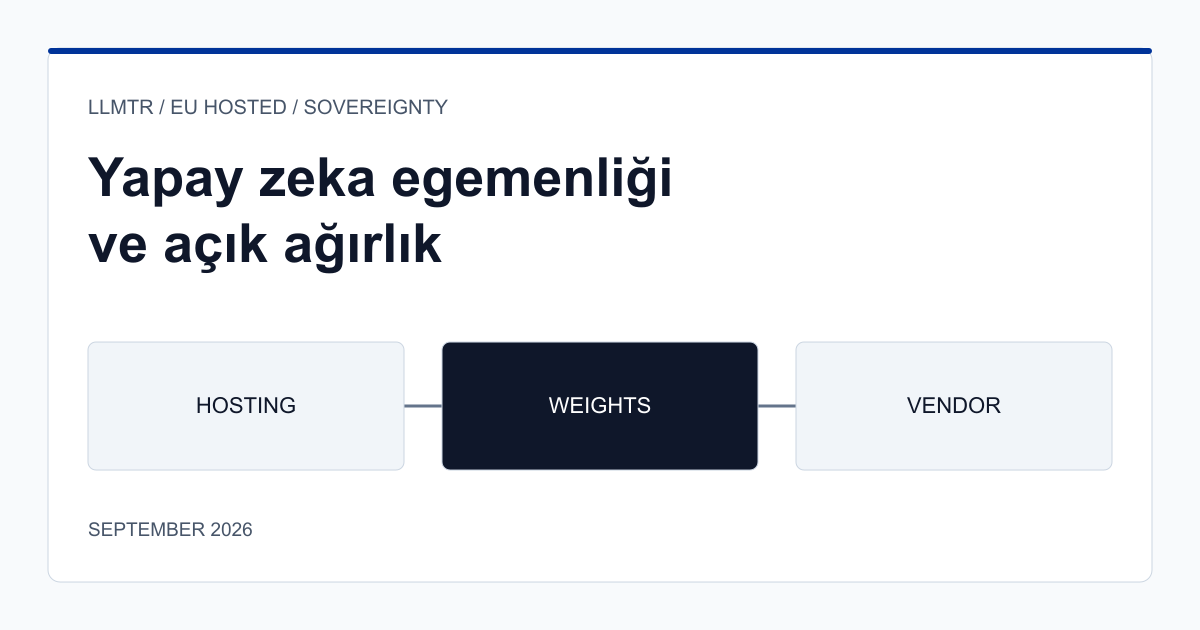
Three separate questions under one heading
Sovereignty usually covers three different needs at once: where data is processed, who can obtain the model weights, and how hard it is to change supplier. They do not imply each other, and most discussions stall because they are treated as one.
A concrete example: a closed-weight model hosted in Europe answers the data question and not the weights question. Running an open-weight model outside Europe does the reverse.
What open weights give you, and what they do not
An open-weight model gives you the option of running it somewhere else if you need to. That is the most concrete reduction of vendor dependence available: when a provider changes its price or withdraws a service, you still hold a portable option.
What it does not give you is automatic compliance or automatic quality. Open weights do not show that the model is good for your task, and being runnable somewhere does not mean you can afford to run it there.
What that looks like in the catalog
A substantial part of the 34 chat rows in the EU category comes from open-weight model families. That keeps open the option of running the same family at another provider, or on your own infrastructure, if you need to.
But the whole category comes from a single provider, and that is the honest counterpoint: while the hosting question is answered, the supplier question narrows to one name. Planning a second provider for critical workloads therefore still makes sense.
A decision framework
Answer the three questions separately and decide which one binds you. For most teams the data question is a regulatory requirement while the weights question is a resilience preference, and scoring full marks on both at once is not always possible.
A practical approach: start with a row that satisfies the regulatory requirement, document a version of the same model family running elsewhere as a fallback, and measure once how long a switch actually takes. An exit plan you have never run is not a plan.
Frequently asked questions
Does using an open-weight model solve data protection?
No. Open weights do not change where the model runs. The data question is about hosting and the sub-processor chain; the weights question is about portability.
Is using a model hosted in Europe the same as sovereignty?
Not on its own. Hosting location answers one of the three questions. Vendor dependence and access to model weights need separate assessment.
How do I set up a fallback provider?
Identify a version of the same model family running elsewhere, write down which code change a switch requires, and actually try it once. A fallback you have never exercised provides no assurance.