Integration guides · 2026-09-22
How reasoning_effort levels change roleplay output on Aion 2.0
Covers when to choose the none, low, medium, and high reasoning_effort levels on the DeepSeek V3.2-based Aion 2.0 for a roleplay and storytelling flow.
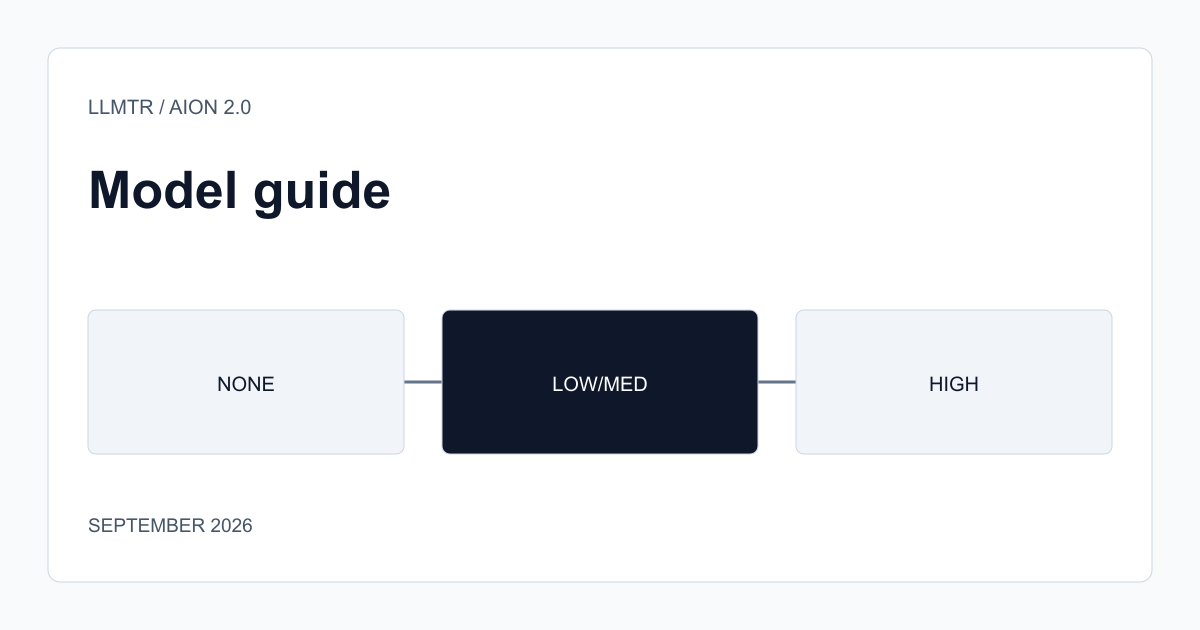
What sets it apart from other roleplay models: controllable thinking
Unlike Aion 2.5 in the same family, Aion 2.0 supports reasoning_effort; its catalog page lists none, low, medium, and high levels, controllable on LLMTR through a suffix or a request body field. That's an uncommon control point among roleplay models: most roleplay-focused models either always respond fast or offer no option over thinking time at all.
The practical value of this control is being able to tune the same model to a different balance point for different scene types.
Which level fits which scene type
For a fast, flowing character exchange (a scene expecting an instant reply in a chat interface, for example), the `none` or `low` level keeps latency low and preserves a natural conversational pace. For a more complex narrative scene tracking multiple characters' long-term motivations, consistency with previous scenes, and building tension, on the other hand, the `medium` or `high` level lets the model weigh these elements more thoroughly before responding.
There's no fixed rule; trying a few levels on the same scene type with your own story examples and seeing which one delivers the consistency you expect at a reasonable latency is the most reliable method.
- Fast, flowing dialogue: the none or low level keeps latency low.
- Multi-character scenes needing consistency: the medium or high level gives more thorough evaluation.
- Don't assume a default level without testing it against your own story examples.
Cache-read pricing helps with repeated character definitions
In a roleplay session, the character definition and world rules are usually a fixed prefix resent on every request; Aion 2.0's cache-read pricing processes that repeated prefix at a lower cost. Keeping that fixed text at the start of the request in a long session increases the chance of benefiting from the cache.
Frequently asked questions
Can I change the reasoning_effort level mid-session?
Yes, the level is sent separately on every request; you can change it at different points in a session based on the scene's intensity at that moment.
Does Aion 2.5 offer the same reasoning_effort control?
No, Aion 2.5 is a separate model aimed at a faster, more natural response flow; reasoning_effort control is listed on the catalog page as specific to Aion 2.0.