RAG and data · 2026-09-22
Truncating EmbeddingGemma 300M's vector: from 768 to 128 dimensions
Covers what Turkey-hosted EmbeddingGemma 300M's support for truncating its 768-dimensional vector down to 512, 256, or 128 dimensions means for storage cost and search speed.
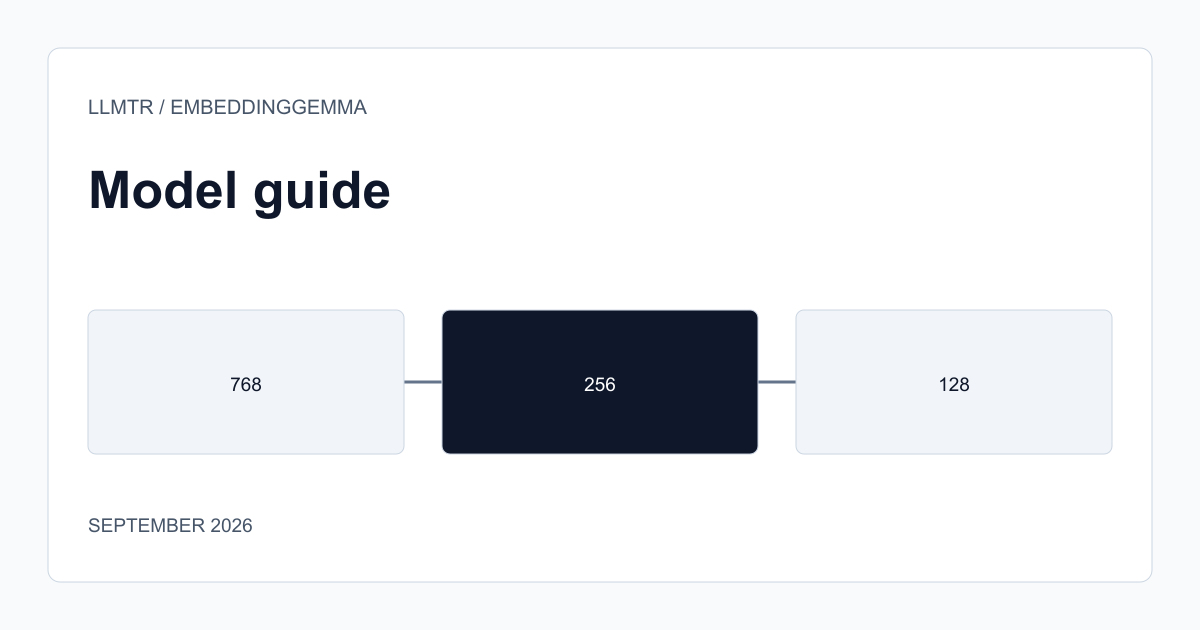
Vector dimension isn't fixed — it's selectable
The vector EmbeddingGemma 300M produces is 768-dimensional by default, but the model page states that this vector can be truncated to 512, 256, or 128 dimensions. That means not every application has to carry the same 768-dimensional vector — you can choose a smaller vector based on your need.
Truncation is as simple an operation as taking the vector's first N dimensions; this approach relies on a training technique that orders dimensions by importance, so a truncated vector drops the least important dimensions rather than losing information at random.
What a smaller dimension gains and costs
A smaller vector dimension takes up less storage in a vector database and makes similarity search run faster; in a search system with millions of documents, that difference can be noticeable in both cost and latency. On the other hand, as the dimension shrinks, the semantic detail the vector carries decreases, which can cause some drop in search quality — especially in distinguishing documents with close meanings.
768 dimensions is a reasonable default for small-to-medium collections aiming for the highest quality; 128 dimensions is an endpoint worth considering when storage and speed are the priority in a very large-scale system. 512 and 256 offer a balance point in between.
- Smaller dimension: less storage, faster search.
- Larger dimension: more semantic detail, higher search quality.
- 512/256 dimensions offer a middle balance between storage and quality.
Test the decision with your own collection
Predicting which dimension is sufficient for your dataset in advance is hard; running the same query set at different dimensions and comparing search hit rate gives a more reliable decision than trusting a general assumption. The difference may not show on a small collection, but dimension reduction can be felt more noticeably on a very large collection containing documents with close meanings.
Frequently asked questions
Can I change the vector dimension later?
Changing the dimension requires re-embedding every document in your collection at the new dimension; you can't mix vectors of different dimensions in an existing vector database.
Is the smallest dimension (128) always the most cost-effective choice?
Yes for storage and speed, but search quality can drop. Base the decision on hit rate in your own query set, not cost alone.