Model comparison · 2026-07-28
Which AI is used in the public sector? Applications in Turkey and how models are chosen
The question of which AI is used in the public sector has two answers: the applications institutions have announced, and the model classes running underneath them. This guide separates both with verifiable examples.
Why the question needs two answers
Asking which AI is used in the public sector usually expects a single brand name. The real picture is different. One institution may run several technologies at once: text classification in the call centre, a large language model in the citizen assistant, computer vision in field monitoring.
So the question splits in two: which institution announced which application, and which model class runs underneath it. Public announcements mostly answer the first; the technical choice is rarely disclosed. Both are covered separately below.
Announced public sector AI applications in Turkey
The examples below come from institutional announcements, Anadolu Agency reporting, and the Turkish Informatics Association KamuBIB working group compilation of public AI applications. The list is a cross-section rather than an exhaustive inventory.
What they share is narrow scope. None of them produces an administrative decision directly; each either speeds up access to information or detects an event early.
- State Airports Authority: a flight assistant chatbot trained with a deep learning model, covering departure and arrival points, times, airport navigation, and location-based weather.
- General Directorate of Forestry ORIKEM: forest monitoring and integrated response, with detections relayed to the forest management chief in real time.
- Ministry of Justice: an AI branch office established within the IT directorate and expanded use across justice services.
- ISKI: a target of roughly 40 percent reduction in call centre workload with the Alo 185 smart assistant.
- Canik Municipality: an AI layer integrated into the call centre that routes requests to the responsible unit.
- Nevsehir Municipality: a citizen assistant covering municipal services, announcements, events, transport, and tourism information.
Which model class runs underneath
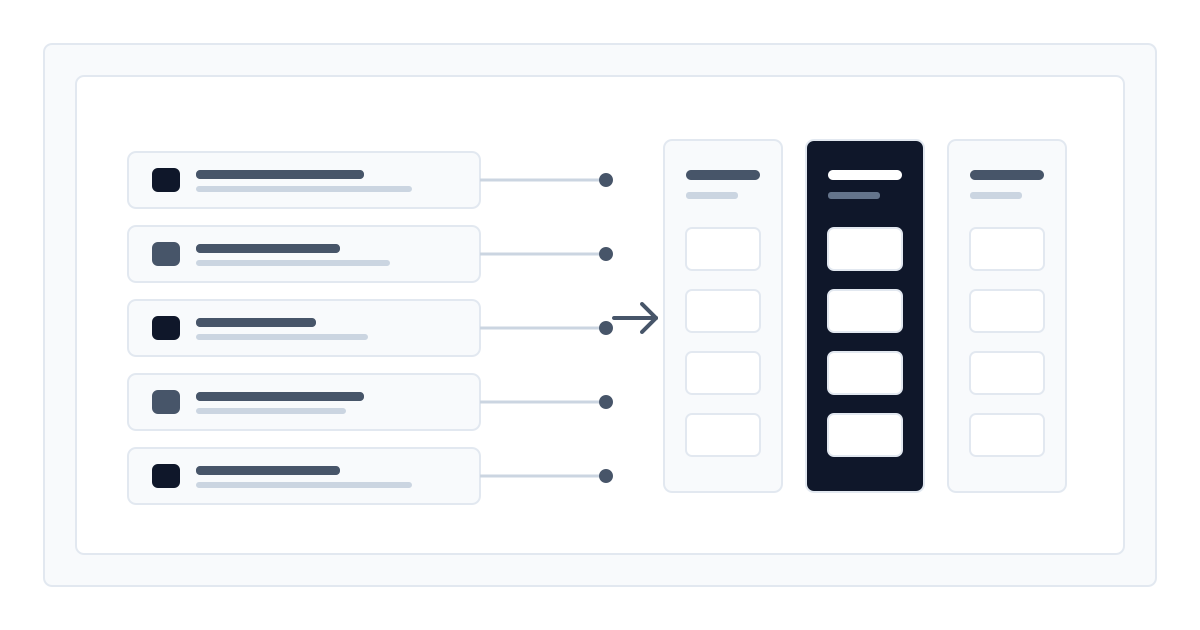
A public institution rarely picks one model; it uses different classes per task. The mapping below connects the application types above to their technical counterpart.
The distinction matters for cost. Classification and routing run on small, inexpensive models. Citizen assistants that produce free text need larger models, and that is where token cost comes from. Combining both layers in the same service lowers the budget meaningfully.
- Request classification and routing: small, fast language models; low token cost at high volume.
- Citizen question answering: mid or large language models with a RAG architecture over institutional documents and visible sources.
- Regulation and document analysis: long context window models that process a whole document in one request.
- Image-based monitoring: computer vision models rather than language models, for field scenarios like ORIKEM.
- Voice call centre: speech recognition plus a language model working on the transcribed text.
What a public institution should evaluate
Model selection in the public sector is not only a quality comparison. Leaderboard scores say nothing about where data is processed. The decision comes down to four headings.
The LLMTR catalog lists models with provider, context window, modality support, and unit price. Turkey-hosted and global models are called through the same API surface, so the same evaluation set can run across several models and the choice can be made by measurement.
- Data locality: whether the hosting location matches the institution's data classification.
- Turkish quality: accuracy on regulatory language, official correspondence style, and abbreviations, measured with your own test set.
- Capability match: verify tool calling, long context, or image input support if the workflow needs it.
- Cost predictability: unit price multiplied by expected monthly request volume, written down together with a ceiling.
Primary and fallback models instead of one model
Downtime tolerance is low in public services. A citizen assistant bound to a single model stops entirely during a provider incident. Defining a primary and a fallback model from the pilot stage is a baseline requirement rather than a later improvement.
On one OpenAI-compatible gateway, switching to the fallback is a model identifier change; no second integration is needed in application code. The same approach covers price changes and model retirement.
Verify that the fallback supports the same capability set as the primary. In a flow that uses tool calling, a fallback without it produces silent failures.
Which organisation types LLMTR fits
There is no single answer to "which AI should we use"; each task calls for a different model class. LLMTR keeps that choice on one OpenAI-compatible API: a small model for classification, a larger one for a citizen assistant, and a fallback model during an outage, all reached with the same key. The model identifier changes; the integration does not.
The whole task-to-model mapping above lives in one catalog. A small model for classification, a larger model for the citizen assistant, and a fallback for outage scenarios can all be called with the same key, without writing a separate integration per task.
- Classification and tagging: small models suffice; the Turkey-hosted llmtr/qwen3-5-4b is one example.
- Internal search and RAG: an embedding model is required; llmtr/embeddinggemma-300m is a Turkey-hosted option.
- Citizen replies and summarisation: mid-sized chat models; llmtr/gemma-4 and llmtr/trendyol-7b are in the catalogue.
- Long legislation analysis and code: long-context global models are called from the same catalogue.
- The model identifier, token count and cost are recorded; prompt text is not written to that record.
Frequently asked questions
Is there a single answer to which AI the public sector uses?
No. Institutions use different model classes per task: small models for classification, large language models for citizen assistants, computer vision for field monitoring. Public announcements usually describe the application rather than the underlying model choice.
Which AI applications have municipalities announced?
Published examples include the ISKI Alo 185 smart assistant, the Canik Municipality call centre integration, and the Nevsehir Municipality citizen information assistant. All three focus on information access and request routing rather than decision making.
Does an institution need to train its own model?
In most scenarios no. The common way to answer correctly from institutional knowledge is connecting approved documents through a RAG architecture rather than retraining a model. That approach avoids retraining cost every time content changes.
Can several models be evaluated at the same time?
Through an OpenAI-compatible gateway, different model identifiers can be called with the same client code. That lets one evaluation set run across several models so accuracy, latency, and cost can be compared directly.
Can a public institution use several models through one platform?
Yes. The LLMTR catalog lists Turkey-hosted and global models on the same OpenAI-compatible API surface. Because different model identifiers can be called with the same client code, classification, question answering, and document analysis can be spread across different models, and primary and fallback models are defined on the same surface.
Which LLM API can data-sensitive sectors use?
In areas such as legal, finance, public sector, health, and critical infrastructure the decisive criteria are whether prompt content is stored, how keys are held, and where the model is hosted. On LLMTR prompt and response bodies are not written to the usage database, customer keys are stored as SHA-256 hashes, and Turkey-hosted models are marked separately in the catalog.