LLM gateway basics · 2026-05-21
What is an LLM gateway? Multi-model API architecture
Learn how an LLM gateway provides one API for multiple models, pricing visibility, and model-routing decisions.
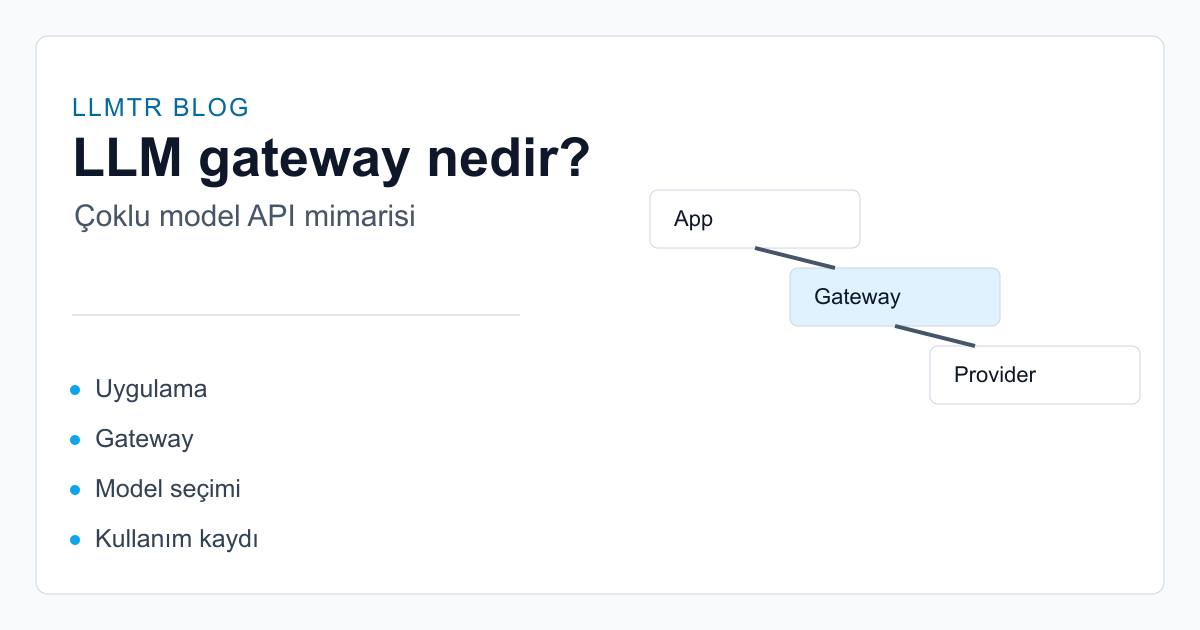
The problem an LLM gateway solves
As an application grows, one model rarely covers every workload. Code generation, long-context analysis, vision, low-cost chat, and search-grounded answers may each call for different models.
An LLM gateway puts a standard API layer between the application and providers. The app calls one endpoint while the gateway handles authentication, model choice, pricing, and error shape.
Core pieces in production
A reliable gateway is more than a proxy. Per-user API keys, rate limits, usage records, model-catalog management, and safe error messages need to work together.
- API keys tied to users and spending controls.
- A model catalog with provider, modality, context, and pricing facts.
- Usage metering for tokens, latency, and cost.
- A clear data policy for prompt and response handling.
Where LLMTR fits
LLMTR keeps an OpenAI-compatible API surface while combining the model catalog, billing, and Turkey-focused control layer. Teams can change model choices without rewriting application code.
Frequently asked questions
Is an LLM gateway the same as a model router?
A router may only decide which model to call. A gateway also covers authentication, usage, pricing, security, and compliance-related surfaces.
Does a gateway add latency?
Any intermediate layer adds a small network and processing cost. In return, teams gain centralized authentication, observability, and easier model changes.