Trust and security · 2026-09-22
Contract analysis automation: an AI API workflow for law firms
Covers which step of the contract review process fits automation, which step should stay under human approval, and where verification responsibility sits.
From a general framework to a concrete workflow
The privilege, verification, and data security topics covered in the AI in law guide are general principles that apply to every legal use case. Contract analysis is a good example of how these principles play out in a concrete workflow: tasks like comparing against a standard contract template, flagging deviating clauses, and detecting missing standard clauses fit a language model well.
But that does not mean the final decision on a contract's legal validity can be left to the model; the model should be positioned here as a first-pass screening layer.
Which step fits automation, which should stay with a human
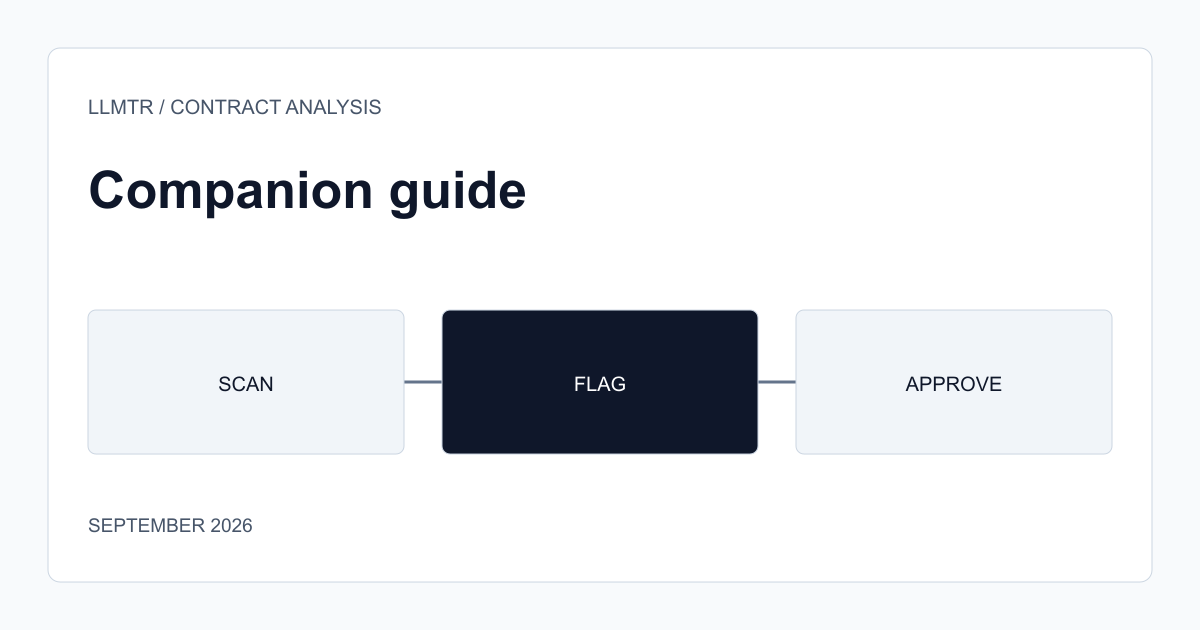
Scanning a contract clause by clause and flagging sections that deviate from a standard template saves time in situations needing fast pre-review of many similar contracts; this is a filtering step that directs human attention to the actually risky points. Detecting that a standard clause expected to be present (a confidentiality or termination clause, for example) is missing from the contract similarly fits automation.
Deciding how serious a clause's legal risk is, finding a clause acceptable given a party's concrete situation, or setting a negotiation position, on the other hand, are decisions that should stay within a lawyer's professional judgment. The model can offer a suggestion here, but the final decision and responsibility remain with the human.
- Template comparison and deviation detection: fits automation as a pre-screening pass.
- Detecting a missing standard clause: fits automation as a checklist function.
- Risk assessment and the final decision: should stay within a lawyer's professional responsibility.
Before sending contract text to the model
A contract carries sensitive information such as party identities and commercial terms. The data security principles covered in the AI in law article apply directly here: before sending the contract, you need to clarify what data actually needs to be processed, the provider's data retention policy, and whether client consent is required under your internal policy.
Frequently asked questions
Can AI decide whether a contract is legally valid?
No. The model can provide a first pass by flagging deviations from a standard template or missing clauses, but the decision on legal validity and risk assessment stays within the lawyer's professional responsibility.
What information should be checked before it's sent to the model in a contract analysis?
You should check that processing information such as party identities and sensitive commercial terms complies with your internal data policy and any required client consent, and the provider's data retention policy, before sending it.