Trust and compliance · 2026-09-08
How to Verify an EU Data Residency Claim for an AI API
Learn how much weight different kinds of evidence carry when assessing an EU data residency claim, why the sub-processor chain is decisive, and what can genuinely be verified from outside.
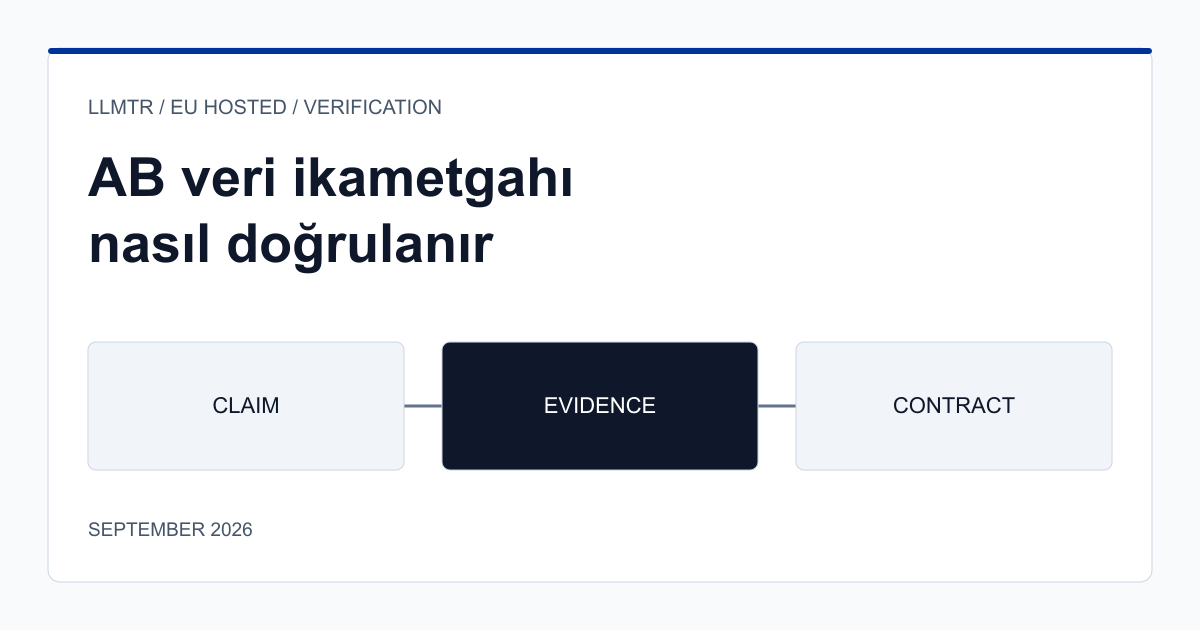
What you can and cannot verify from outside
You cannot walk into a data centre and look at the server. That does not make the claim worthless; it means you have to decide knowing what kind of evidence you hold. What can be checked externally is limited and usually indirect.
Presenting an unverifiable claim as verified is the most common error in this area. A vendor can make it, and so can a buyer — by seeing a badge and ending the assessment there.
Rank the evidence types by weight
The same claim can arrive from different sources, and they are not equal. Writing down which column each item falls into is far more reliable than trying to remember later.
A practical hint: a provider's machine-readable endpoints and its marketing pages often do not say the same thing, and the difference is exactly where you should be looking.
- Contractual commitment: the only category with a consequence if broken.
- Independent audit report: check its scope and date, not just its name.
- Published policy page: a statement, not a contract.
- Marketing copy and badges: the weakest source; on their own they establish nothing.
The sub-processor chain is decisive
A platform running its own servers and a platform sitting in front of other providers produce very different pictures. In the second case residency is a question about every link in the chain rather than about the platform, and the full chain may not be published.
The EU category in our own catalog is a live example, and we write it as it is: the provider's pricing endpoint names five sub-processors while its published data-location page lists two. For the models in this category, processing inside the European Union is what the provider states; LLMTR has not independently verified it.
Make the assessment repeatable
A one-off check goes stale the moment the sub-processor list changes. Record the assessment: on what date, from which source, you saw which claim. That is the only way to see what changed when the provider swaps a link.
Look for advance notice and an objection right for sub-processor changes in the contract. That clause is the single mechanism keeping a residency claim alive over time; without it, today's verification does not support tomorrow's decision.
Frequently asked questions
Do IP address or latency measurements prove where hosting happens?
No. Network measurements hint at where traffic passes; they do not show where data is processed or stored. Caching and routing layers mislead this measurement easily.
Is a provider statement useless then?
It is not. Once it is in a contract it has legal consequences and becomes a commitment. What you should not do is treat a statement as equivalent to independent verification.
Is an incomplete sub-processor list a problem by itself?
It is not automatically a breach, but it is a risk you cannot assess. Ask for the unpublished links in writing and keep it as an open item until you have an answer.