Trust and compliance · 2026-09-19
Logging in to EVREN with e-Devlet: your API key is tied to your identity
EVREN login goes through e-Devlet, Turkey's government identity portal, and the API key is created in that personal account. We look at what this means for teamwork, key sharing, developers abroad and company use, with sources.
How do you log in to EVREN?
EVREN login goes through identity verification on e-Devlet, Turkey's government identity portal. The announcements published by universities give the platform address and the e-Devlet login in the same sentence. We found no source mentioning a separate email-and-password sign-up option.
For a public platform this is an understandable choice: it is clear who is using it, fake accounts are hard to open and the platform's credit system can be tied to a person.
Where does the API key live?
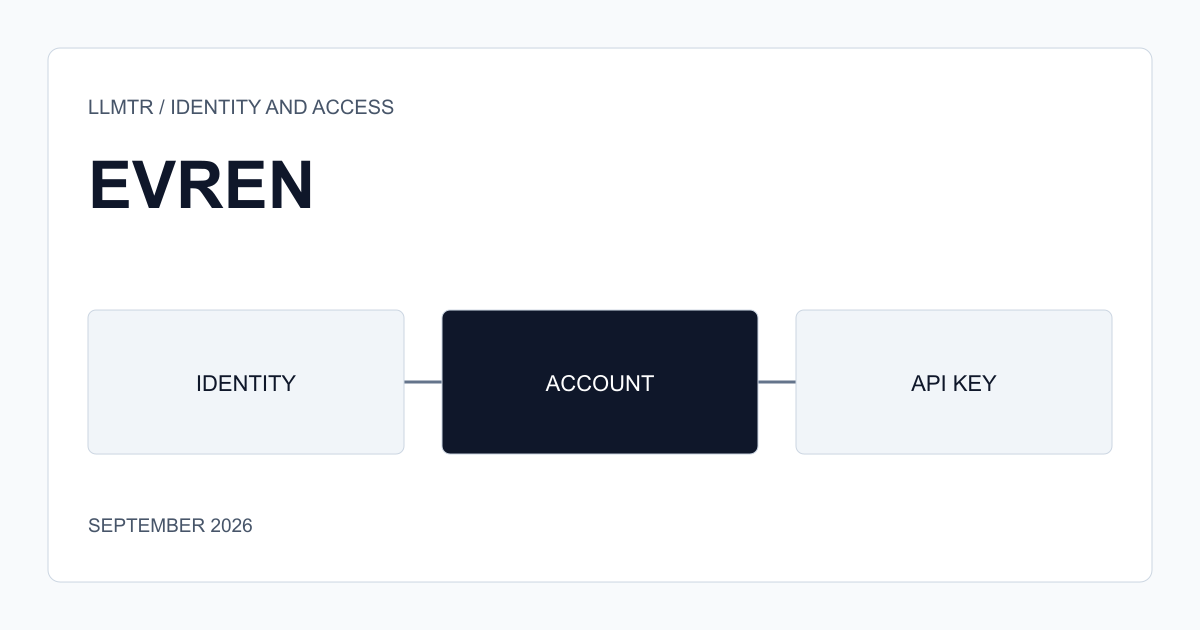
The key is created on the API keys page of the account you opened with e-Devlet. So the key is bound to an account that belongs to a person, not to a team or a company. Your API key lives in the same account as your national ID number. We suggest remembering this on the day you hand a key to a teammate.
The terms of use are also accepted from this account, through a request sent to the API. Every request made with the key is recorded against the account of the person who accepted the terms.
What sharing the key means
Sharing an API key inside a team is a bad but common habit with most services. With EVREN it weighs a little more: what is shared is not a project key but a door into the account of an identity-verified person. Usage and quota consumed with the key accumulate on that account, and if a use breaches the terms, that account is the one held to it.
If the key leaks, the only thing you can do is log in to that person's account and revoke it. If that person is on leave or has left the company, the question of who takes that step stays open.
Team and company use
We found no public information about company accounts, team membership, role-based access or invoicing on behalf of an organisation. That does not mean these do not exist; but today there is no public document explaining how a company would use EVREN as a team.
In practice each team member opens their own account with their own e-Devlet and uses their own key, and quota and credit run per person. For a shared production service the answer to 'whose key is this?' is always a person's name. A team member without an e-Devlet account, a contractor abroad for example, cannot open an account.
Account and key structure in EVREN and LLMTR
The table below puts the account and key side of the two services next to each other. The EVREN column rests on public sources, the LLMTR column on our own product behaviour. Where we do not know, we wrote 'not found' instead of leaving a gap.
| Topic | EVREN | LLMTR |
|---|---|---|
| Opening an account | Identity verification with e-Devlet | Email sign-up |
| What the key is bound to | A personal account opened with e-Devlet | The LLMTR account |
| More than one key | In-account API keys page; no public information found on team structure | Several named keys per account |
| Per-key limits | No public information found | Spend limit, model allowlist, request rate limit, expiry date |
| How the key is stored | No public information found | Only a SHA-256 digest and a short visible prefix in the database |
| Team member without e-Devlet | Cannot open an account | An email address is enough |
Keeping the key safe
This advice applies to any API key; for a key tied to a personal account it matters even more.
- Put the key in an environment variable or a secrets manager, not in the code.
- Keep it as a repository secret in CI and make sure it never reaches the log output.
- Instead of sharing a key, have every team member use their own account.
- If you suspect a leak, revoke the key at once and create a new one.
- Do not bind a production service to one person's e-Devlet account; it turns that person's days off into the service's maintenance calendar.
Summary
e-Devlet login makes EVREN simple and trustworthy for individual use. The same design ties the answer to 'whose key is this?' to one person's identity in team and company use. For trials and research that is not a problem; for a shared production service it is something to think about in advance.
Frequently asked questions
Can I log in to EVREN without e-Devlet?
Every announcement we found describes e-Devlet login; we found no source mentioning a separate email-and-password sign-up option.
Can I share my EVREN API key with my team?
Technically a key is a string and can be shared; but it is bound to your personal account and every use made with it is recorded against that account. Read the terms of use before sharing it. Having each team member use their own account is safer.
Can a developer outside Turkey use EVREN?
Because login goes through e-Devlet, someone without an e-Devlet account cannot open an account. Beyond that, we found no public source on any further restriction by nationality or location.
What should I do if my EVREN key leaks?
Log in to your account with e-Devlet, revoke the key on the API keys page and create a new one. Then check the /v1/quota endpoint for unexpected consumption.
How are API keys managed on LLMTR?
An LLMTR account is opened with an email address. You can create several named keys per account and give each a spend limit, a model allowlist, a request rate limit and an expiry date. Keys are stored in the database only as a SHA-256 digest.