RAG and data · 2026-05-31
Google AI Mode SEO guide: AI Overviews and AI search visibility
Learn how to structure developer-focused LLM gateway content for Google AI Mode SEO, AI Overviews SEO, AI search visibility, and AI search discovery.
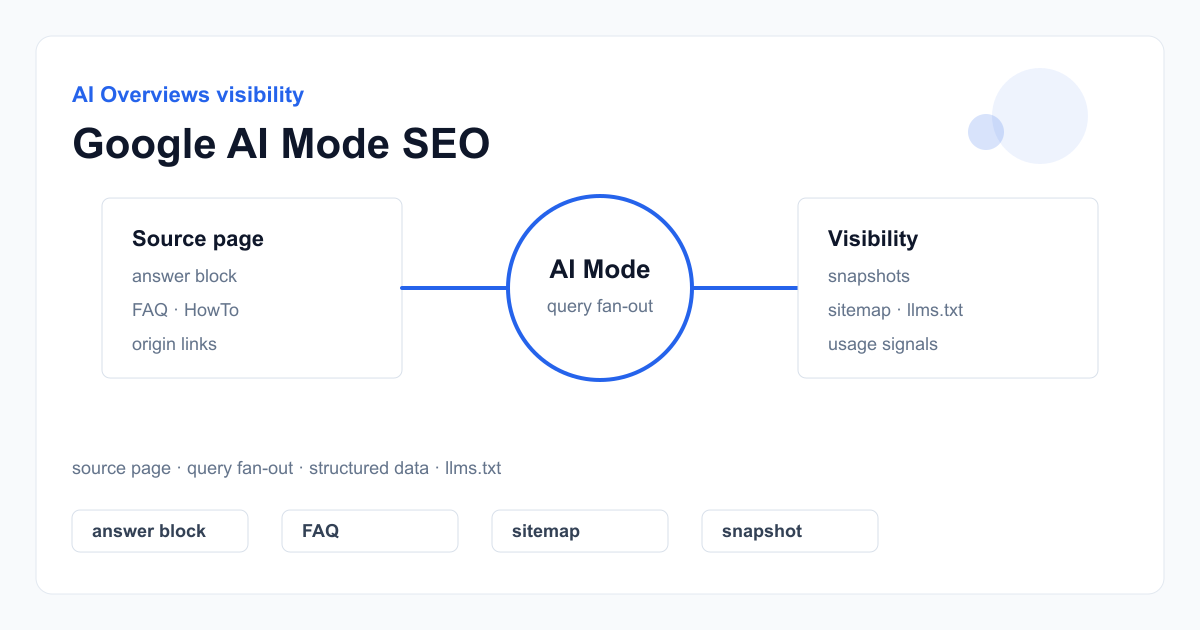
What AI Mode changes about classic SEO
Google AI Mode and AI Overviews accelerate longer, more comparative, and more decision-oriented queries. That makes clear, current, source-worthy content more useful than broad one-word traffic targets.
For a technical product like LLMTR, the goal is not only ranking. Content should answer real developer decisions around model choice, gateway architecture, cost control, and security.
- Put the short definition or decision answer near the top.
- Keep dates, model names, and affected surfaces explicit.
- Offer practical checklists instead of exaggerated claims.
Content structure for AI Overviews SEO
Google Search Central says fundamental SEO practices remain relevant for AI features. In practice, that means fast pages, clear titles, helpful content, indexable HTML, and trustworthy internal links.
LLMTR blog posts include title, description, FAQ, HowTo, and related model or documentation links for each topic. That structure gives both classic search and AI-assisted answer surfaces readable context.
- H1 and meta description should target the same search intent.
- FAQ questions should reflect real user decisions.
- Internal links should be origin-relative and point to live product surfaces.
- Images should include descriptive alt text.
Turning Google Trends signals into technical content
Google Trends, X, and provider announcements do not measure the same thing. One shows search interest, one shows social discussion, and one establishes product reality. Strong SEO content keeps those signals separate.
When choosing current keywords, verify the real product through the provider announcement first, then use Google Trends or social signals to read search intent. The article body should still describe gateway, usage tracking, and model comparison surfaces that LLMTR actually exposes.
- Do not write trend signals as guaranteed traffic promises.
- Use provider documentation for model pricing or availability.
- Describe user-facing decision surfaces instead of internal implementation.
Measurable AI search visibility for LLMTR
AI search visibility is not measured by publishing a page alone. The blog URL should appear correctly in sitemap, llms.txt, SEO snapshots, public search content, and the related-post graph.
That is why new keyword posts should be added to code-verified fixtures. Blog count, publish date, primary keyword, hero PNG size, and snapshot version stay visible in smoke tests.
- New slugs should enter sitemap and bot snapshot loops automatically.
- llms.txt should expose the blog surface as a retrieval target.
- PNG hero images should use stable dimensions and origin-relative paths.
- Internal links should not be broken or protocol-dependent.
Prepare a source-worthy blog post for AI Mode SEO
Turn current keyword signals into product-grounded content with origin-relative links and verifiable SEO fixtures.
- Separate keyword intent. Read Google Trends, X discussion, and provider announcements as separate signals instead of treating one as proof of another.
- Write answer blocks. Give a short definition, decision criteria, and practical checklist in the opening sections.
- Connect internal links. Link related models, docs, usage pages, and earlier blog posts with origin-relative URLs.
- Verify with smoke tests. Add primary keyword, publish date, PNG size, related link, and snapshot version checks to test fixtures.
Frequently asked questions
Does AI Overviews SEO require a special technical tag?
Google's guidance for site owners says fundamental SEO practices still apply. Clear answers, trustworthy structure, FAQ/HowTo content, and accessible HTML are practical advantages for technical products like LLMTR.
Is Google Trends enough for keyword selection?
No. Trends shows search interest. Provider announcements validate product reality, social signals help read user intent, and the existing catalog determines whether the topic fits LLMTR.
How do LLMTR blog posts support AI search visibility?
Each post ships with semantic sections, FAQ, HowTo, related posts, related model or docs links, and SEO snapshot coverage. That gives search bots and AI retrieval systems more consistent context.