Pricing and budget · 2026-09-22
LLM API cost optimization: prompt caching, batching, and model choice
Three concrete ways to lower token cost: making repeated context cheaper with prompt caching, matching the request to the right model tier, and cutting off unnecessary generation early.
Measure first, then optimize
The per-token unit logic described in the AI API cost in Turkey article is the starting point for optimization: without knowing which requests are input-heavy versus output-heavy, you cannot predict which optimization will actually help. In an app carrying a fixed, long system instruction, the real gain comes from caching; in an app that produces a long response from a short request, model choice matters more.
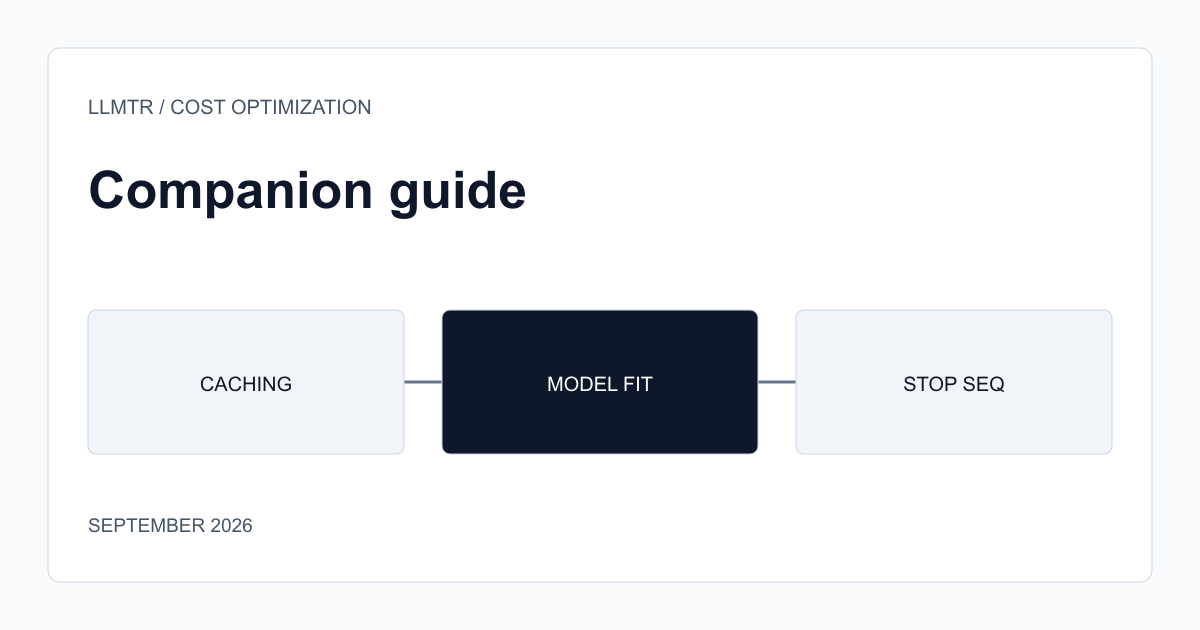
Three independent optimization axes
Prompt caching reads a repeated context prefix (such as a fixed system instruction or a frequently used document) from cache; tokens read from cache are cheaper than the full price. This produces a visible saving in apps that send the same long instruction on every request. Model choice should follow task complexity: sending simple classification or summarization tasks to the most capable (and most expensive) model is often an unnecessary cost; you should test whether a smaller model delivers sufficient quality on the same task.
The third axis is stopping generation early: if you expect a structured output (such as JSON), using a stop sequence or an output format constraint to prevent the model from producing longer text than needed directly reduces output token count.
- Prompt caching: the biggest gain in apps carrying a fixed or long context prefix.
- Model choice: pick the smallest model that is still competent for the task's complexity.
- Early stopping: cut unnecessary generation with a stop sequence on structured output.
The wrong optimization: pricing without checking quality
Switching to a cheaper model based on unit price alone can trigger more retry requests if task quality drops, raising net cost instead of lowering it. Running a quality comparison with real task examples before putting a model change into production is more reliable than looking at the pricing card alone.
Frequently asked questions
Does prompt caching help every application?
The most benefit shows up in applications that resend the same long context (system instruction, fixed document) on every request. If requests do not share a common prefix, caching's effect stays limited.
Does switching to a cheaper model always lower total cost?
No. If quality drops, the user or the application may send more retry requests, increasing token volume and erasing the expected saving. Test the change with real examples first.