RAG and data · 2026-08-18
What Is MEB YAZDIS? Models, Human Review, and Data Security in AI-Supported Textbook Assessment
A technical reading of MEB YAZDIS across multimodal textbook analysis, eight review criteria, RAG, Turkish model benchmarking, precision and recall, human review, and isolated deployment.
Which process YAZDIS will support
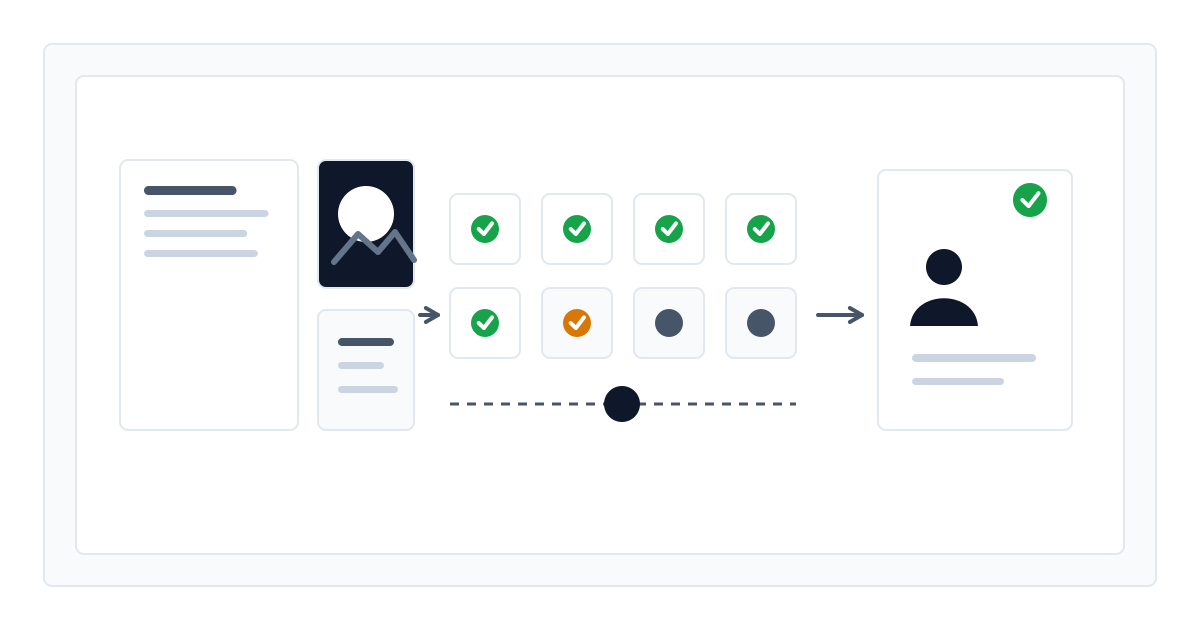
YAZDIS is defined to support textbook review at Turkey's Board of Education and Discipline. In the current process, experts mark a location in a PDF, choose a main and subcriterion, and record an error explanation together with page and position. Those historical records become one of the new system's core data sources.
The goal is not automatic approval or rejection. The system analyses text and visual components and presents possible errors and inconsistencies to reviewers. Experts see the source and rationale, perform the assessment, and the official process remains inside the existing authority chain.
Eight criteria and multimodal review
The specification covers more than grammar. Its eight main criteria are constitutional and regulatory compliance, scientific adequacy, curriculum alignment, integrated curriculum structure, assessment suitability, language and expression, visual and content design, and electronic content scope and design.
That breadth requires text and images to be read together. Contradictory captions, layouts that undermine a learning goal, or a graph that conflicts with written figures cannot be assessed reliably by plain text alone. YAZDIS is therefore described as a multimodal LLM and VLM system.
| Area | Requirement | Institutional control |
|---|---|---|
| Modality | Joint analysis of text and visual components | Error linked to PDF region, page, and coordinates |
| Language | Turkish first, plus English, German, and French | Primary performance target applies to Turkish |
| Retrieval | Vector database, indexing, chunking, and embeddings | Rationale linked to a source document |
| Recall | At least 65% for every main criterion | Share of real errors found |
| Precision | At least 75% for every main criterion | Share of flags that are genuine errors |
| Deployment | Internal isolated operation | Role integration through MEBBIS/e-government and a secure environment |
RAG is the source of the rationale, not only search
Vector storage, document chunking, indexing, embedding selection, data updates, and access management are explicit responsibilities. A detected issue must be associated with the relevant review criterion, curriculum, or source document and shown to the expert.
This replaces fluent but unverifiable general-model explanation with institution-defined evidence. Unless the system records which document version entered and left the index, even a correct-looking citation may rely on an outdated rule.
How the Turkish model benchmark should work
The supplier must compare candidate models and architectures on the institution's labelled data and justify its choice through performance, speed, and hardware cost. Model size is considered alongside available hardware and scalability. The largest model is not automatically the right model.
Results should be reported separately for all eight criteria. An aggregate score can hide weakness in scientific or visual errors behind abundant language examples. Model version, prompt template, image resolution, hardware, and test set must be fixed for a reproducible benchmark.
Precision, recall, and human feedback
The specification targets at least 65 percent recall and 75 percent precision for each main criterion. Low recall misses genuine errors; low precision gives experts too many false alarms. The impact on workload is visible only when both are read together.
Pilot user feedback may feed RLHF, DPO, or GRPO improvement. If expert feedback becomes training data, the MLOps record should show who supplied it, which model version received it, and how an incorrect feedback item can be withdrawn.
Isolation, access, and monitoring
Development, test, and live environments are provided internally or through secure VPN access, and data sets and PDFs are exposed inside the institution's secure environment. The final system must operate as an internal isolated deployment and integrate with existing roles and MEBBIS and/or e-government login. OWASP Top 10, source and model delivery, and operational training are included.
User actions and system errors must enter an immutable central log, while API calls, analysis requests, model outputs, response times, and process states can feed institutional monitoring. Logging needs its own access and retention design so it does not become an unnecessary copy of textbook content.
The boundary for model comparison through LLMTR
Because the YAZDIS production core is specified as an internal isolated system using open-source models, LLMTR's internet API cannot replace it. Sending draft textbooks or historical error records directly to a global model cannot be presented as meeting the secure institutional boundary.
If the institution approves a non-sensitive benchmark set for comparing general Turkish and multimodal capabilities, a gateway can collect cost, latency, and token measures through one surface. This is a technical analysis and does not constitute legal advice; use of real data and external services belongs to MEB's information-security, compliance, and legal teams.
Frequently asked questions
What is MEB YAZDIS?
It is an AI-supported decision-support system defined to present possible errors and inconsistencies in textbook text and visuals to reviewers at Turkey's Board of Education and Discipline.
Will YAZDIS automatically decide whether a textbook is accepted?
No. The system presents findings and evidence; assessment and the official decision remain in the human authority chain.
Which languages will YAZDIS support?
Turkish is the primary performance target, with support also requested for English, German, and French. No separate performance threshold is set for those three languages.
What are the YAZDIS precision and recall targets?
At least 65 percent recall and at least 75 percent precision for each of the eight main criteria.
Can YAZDIS run on LLMTR's API?
The specification requires an internal isolated production system, so LLMTR's external API cannot replace the core. Only separately approved non-sensitive benchmarking could be considered.