Model comparison · 2026-09-22
OpenAI o3: three-level reasoning_effort for math, science, and code analysis
Covers that openai/o3, unlike the GPT-5.6 family's six-level reasoning_effort, carries only low, medium, and high levels, and how to use that simpler range.
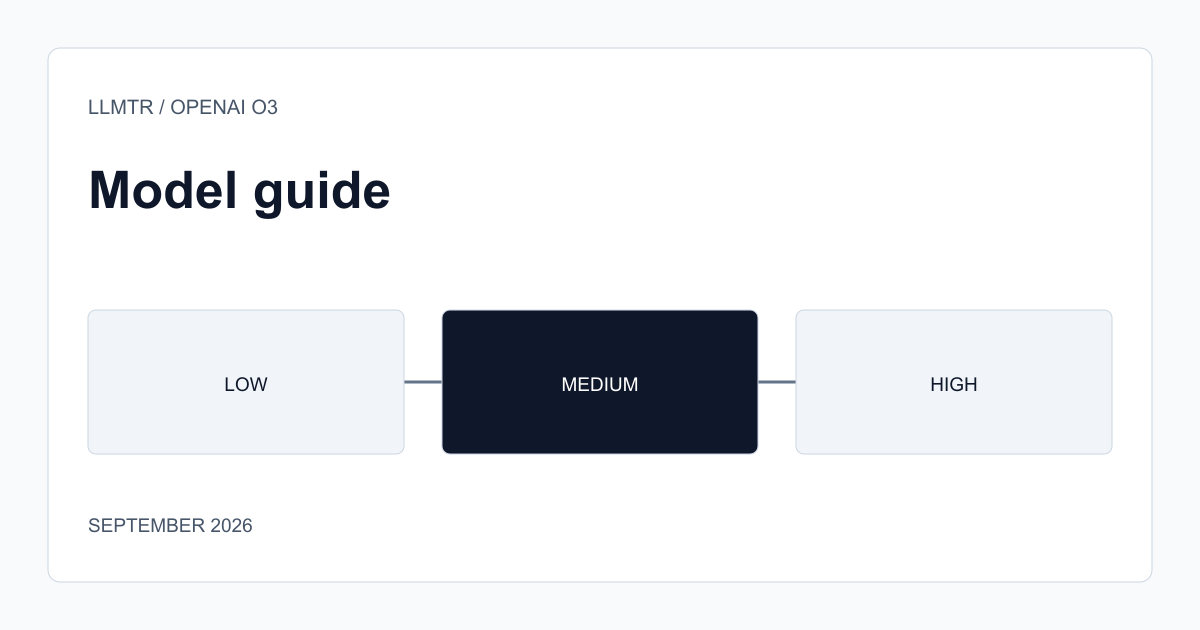
Three levels, less decision fatigue
openai/o3's catalog description positions it for multi-step thinking tasks across math, science, technical writing, and code analysis. Unlike the GPT-5.6 family's six-level reasoning_effort range from none to max, o3 accepts only low, medium, and high. That simpler range reduces decision fatigue: you don't need to weigh fine differences (like between xhigh and max), you choose among three clear options based on task complexity.
The model is called through the Chat Completions interface and also accepts image and document input; that makes it possible to give a photo of a math problem or a section of a technical document directly as input.
Which level for which task
Low runs at low latency for relatively simpler tasks that still need some reasoning (reviewing a short code snippet, for example). Medium can be considered a reasonable default for most technical analysis and medium-complexity math problems. High provides the most thorough evaluation on tasks needing a multi-step proof, a complex scientific calculation, or deep code analysis, but carries the highest latency and reasoning-token cost.
The GPT-5.6 family's 'none' level (turning thinking off entirely) has no counterpart on o3; even o3's lowest level, low, runs some reasoning steps. If you genuinely want an instant, non-reasoning response, a lighter model without reasoning should be considered instead of o3.
- low: simpler tasks that still need reasoning, low latency.
- medium: a reasonable default for most technical analysis and medium-complexity problems.
- high: multi-step proofs, complex calculations, deep code analysis.
temperature and top_p aren't supported
The model page lists `temperature_unsupported` and `top_p_unsupported` capabilities; adding these parameters to your request won't have the expected effect. If you want to control response variability, adjust the reasoning_effort level and prompt design on this model rather than relying on these two parameters.
Frequently asked questions
Can I turn reasoning off entirely on o3?
No, even the lowest level, low, runs some reasoning; if you want a fully non-reasoning response, use a different model without reasoning.
Is o3 more expensive than GPT-5.6 Terra?
The two models carry different pricing cards (o3: $2/$8 input-output); check the current pricing page for an exact comparison, since prices can be updated over time.