Trust and compliance · 2026-05-22
LLM API security: API keys, rate limits, and prompt logging
Plan LLM API security across API-key management, rate limits, prompt data policy, budget control, and safe errors.
Why LLM API security is different
LLM API requests can contain customer data, company information, file content, or code snippets inside prompts. A bad integration can also generate high cost quickly.
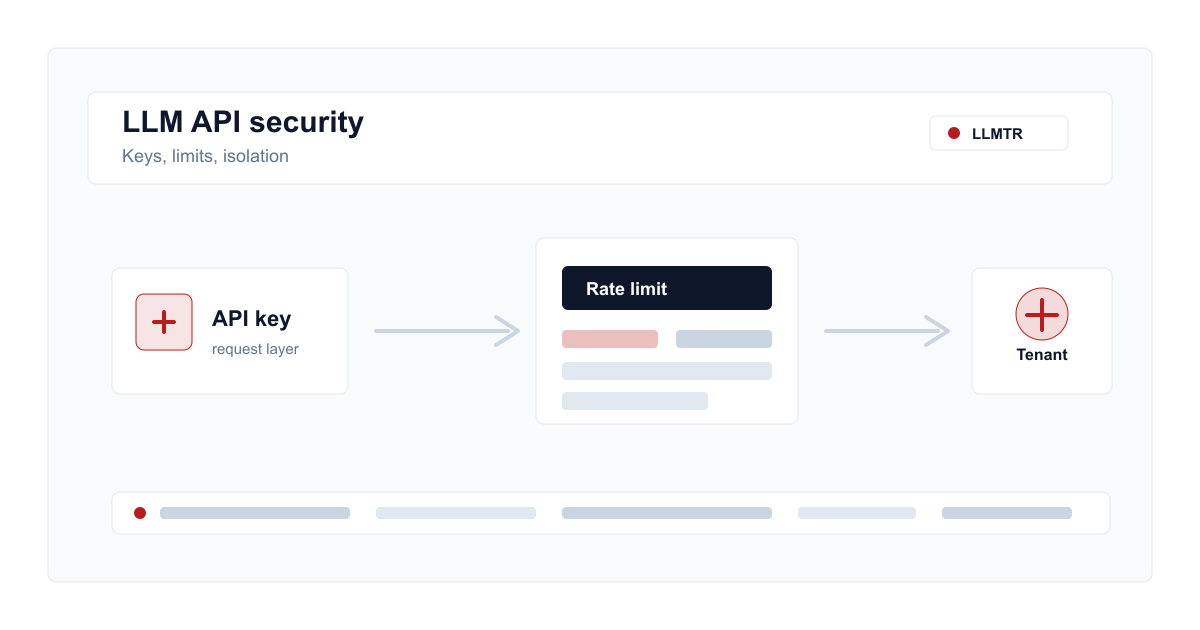
Security is therefore more than validating an Authorization header. Key lifecycle, budget limits, rate limits, and data policy need to be designed together.
API-key storage and access
API keys should never be written into frontend code, mobile apps, or public repositories. The raw key should be shown only at creation time and stored securely by the customer.
- Raw API keys should not be retrievable.
- Key access should be tied to the user and usage scenario.
- Revoked keys should stop working immediately.
- Use server-side environments or secret managers.
Rate limits and budget controls
Rate limits protect both infrastructure and user accounts from unexpected cost. Requests per minute, tokens, concurrent streams, and spend limits should be considered separately.
Prompt logging policy
How prompt and model response bodies are handled is a critical security and compliance decision. LLMTR states those expectations on model pages and legal notices.
Frequently asked questions
Can I store an API key in frontend code?
No. A frontend key is visible to users. LLM API keys should be kept server-side.
Is disabling prompt logs enough?
No. Even with a clear prompt data policy, safe errors, rate limits, and access boundaries still need design.
Related posts
- What to do if a Google API key is stolen: Gemini spend caps and proxy controls
- KVKK and LLM APIs: prompts, logging, and data residency
- AI agent API architecture: tool calling, security, and LLM gateway
- Prompt injection in LLM APIs: defending against direct and indirect attacks
- LLM gateway failover architecture: how high availability is built
- Gemini API key rotation and least-privilege practice