Agent and MCP guides · 2026-05-22
Claude API in Turkey: choosing for coding agents and long context
Evaluate Claude API usage in Turkey for coding agents, long context, tool calling, data policy, and Anthropic model selection through LLMTR.
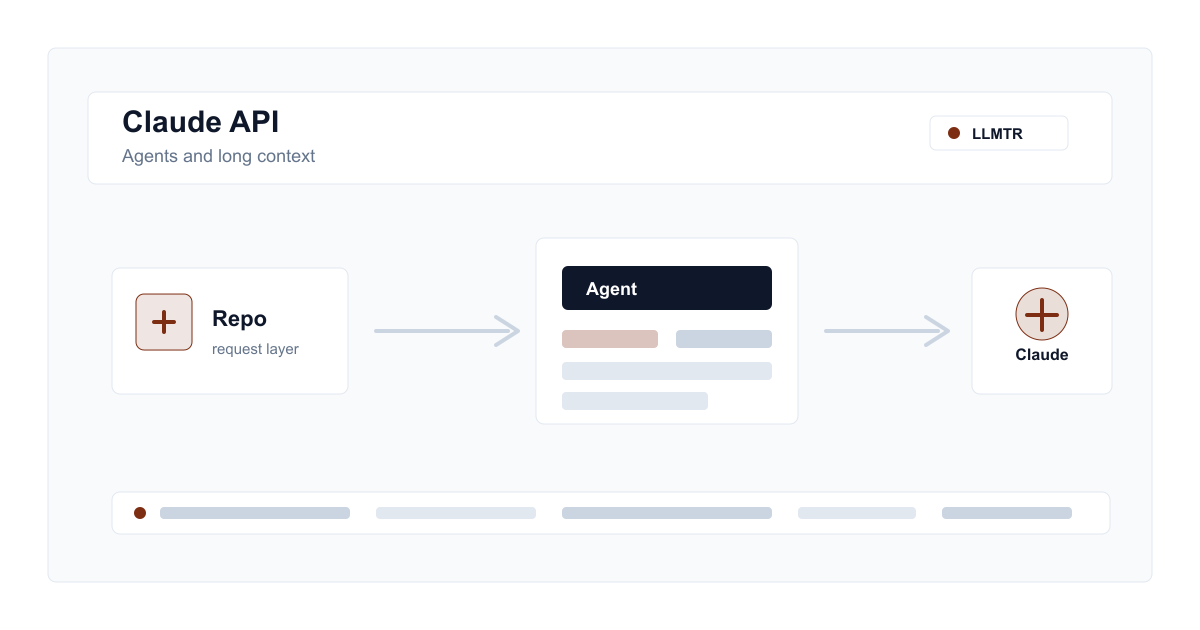
Where Claude API is often evaluated
Claude models are often considered for long context, code review, instruction following, and agent workflows. The decision should not be made by brand alone; context, cost, latency, and tool behavior need to be measured on real workloads.
For teams in Turkey, the additional decision is whether access is managed through one provider account or through a multi-model gateway such as LLMTR.
Controls for coding agents
A coding agent does more than generate text. It may read files, produce patches, run tests, and interpret failures. Model quality matters, but so do permissions, tool boundaries, and logging policy.
- Limit the files and commands the agent can access.
- Keep API keys on the user machine or secure server-side environment.
- Ensure test output passed to prompts does not contain secrets.
- Measure long-context usage together with its cost impact.
Comparing models through a gateway
Testing Claude, GPT, Gemini, and Qwen on the same prompt set shows which model is more reliable for each agent task. A gateway makes this comparison easier without provider SDK rewrites.
Before production
In agent workflows, unsafe permission use can be as risky as a bad answer. Validate API integration, rate limits, user isolation, budget limits, and safe error messages before production use.
Frequently asked questions
Is Claude API always the best choice for coding agents?
No. Claude is a strong candidate, but GPT, Gemini, Qwen, or other models may fit better depending on the task. Test with real prompts.
How does LLMTR help with Claude model access?
LLMTR lets teams evaluate Anthropic models inside the same catalog and OpenAI-compatible gateway surface used for other providers.