Agent and MCP guides · 2026-05-22
Choosing an LLM API for coding agents: Claude, Codex, Gemini CLI
Compare Claude Code, Codex, Gemini CLI, MCP, context windows, tool calling, cost, and safe command execution when choosing an LLM API for coding agents.
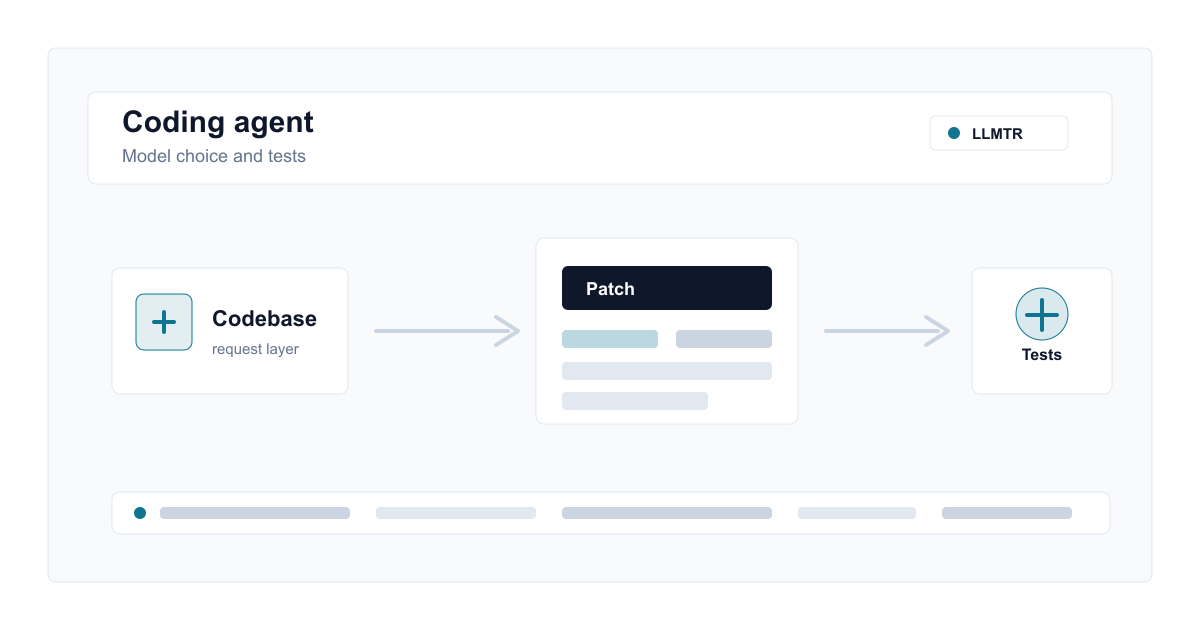
Why coding agents need a separate model decision
Coding agents do more than produce short answers. They read repositories, modify files, run tests, interpret failures, and update a plan across several turns. A model that is good at general chat is not automatically the right coding-agent model.
As Claude Code, Codex, Gemini CLI, and MCP-based tool flows become more prominent in developer workflows, model choice directly affects productivity and safety.
Selection criteria
A good coding-agent model should handle long context, preserve patch format, infer root causes from test output, and avoid unrelated file changes. These traits should be measured on your own codebase, not only benchmarks.
- Context: carrying large files and multi-step tasks.
- Patch quality: small, targeted, reversible changes.
- Tool use: interpreting test, search, and file output correctly.
- Cost: total token usage across long context and retries.
Safe command execution
If the coding agent can run terminal commands, sandboxing, approval rules, and destructive-command guards are required. API keys, .env files, and secret-bearing logs should not be sent to the model.
Multi-model testing through a gateway
Running the same task set on Claude, GPT, Gemini, Qwen, or other models shows which model is more reliable for each repository type. A gateway such as LLMTR makes this comparison easier with one API key and one usage record.
Prepare a benchmark for choosing a coding-agent model
Measure several models on the same tasks in your own repository across quality, cost, and safety.
- Create a task set. Choose 5-10 small real tasks such as bug fixes, tests, refactors, and documentation updates.
- Provide identical context. Give every model the same files, error output, and success criteria without extra hints.
- Test the output. After applying the patch, run the relevant tests and typecheck; record unrelated file changes.
- Calculate total cost. Include the first answer, correction rounds, test output, and retry tokens.
Frequently asked questions
What is the most important metric for coding agents?
There is no single metric. Patch correctness, test success, change scope, cost, and safe tool use should be evaluated together.
Is vibe coding enough for production code?
Not by itself. Agent output needs tests, review, security checks, and real product context.